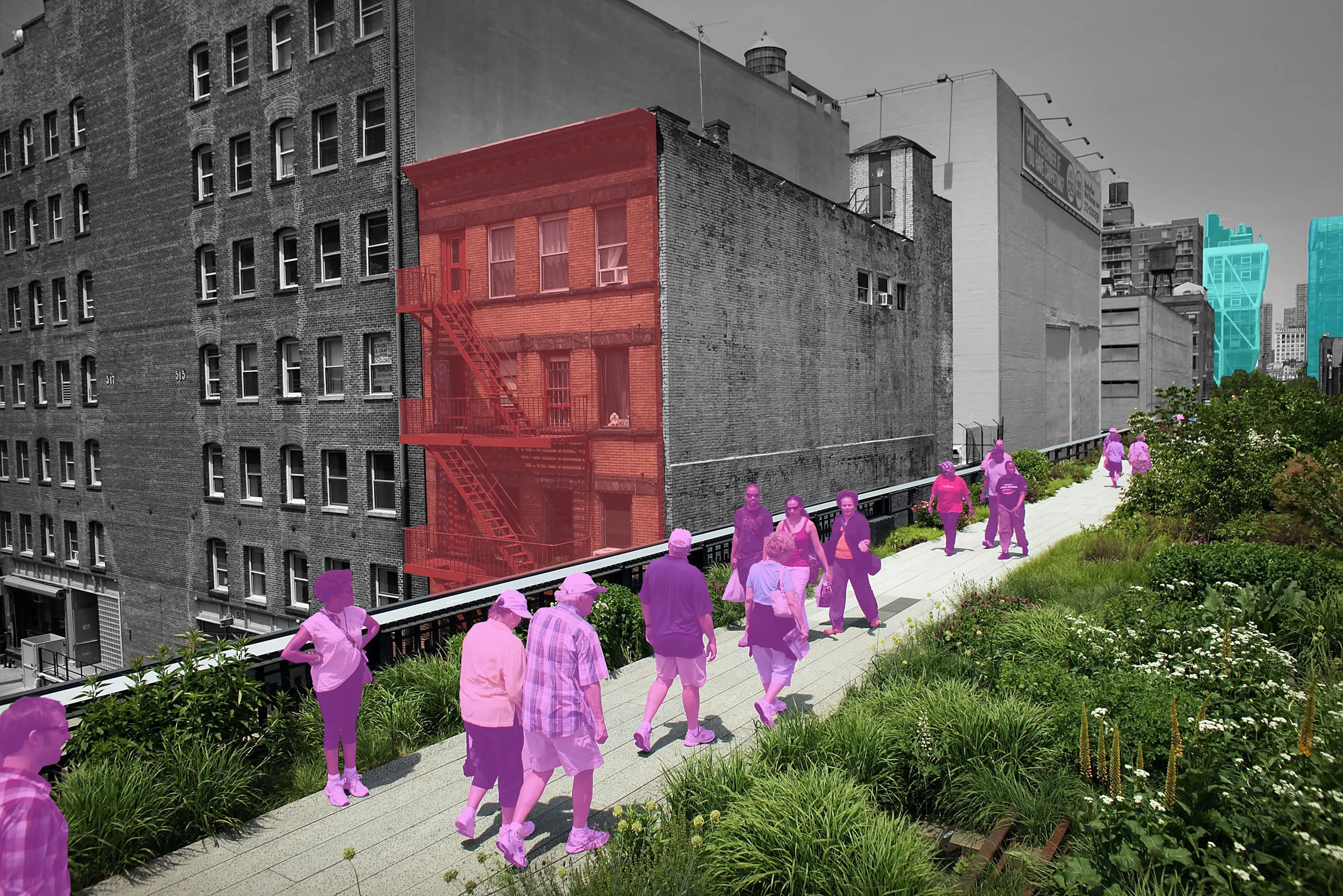
Design motivations for the benefit of many place powerful design into community ownership, leading to unplanned prosperity. New York City’s High Line Park transforms a structure slated for demolition into a scenic greenway for the residents. The park funnels people through the city blocks, removes them from the chaos of the streets, and puts the plants and buildings on full display. Designed to enrich the lives of the locals, word spreads, and its popularity grows. High Line adjacency brings an audience, and the spotlight is cast. Buildings, Art, and people are center stage. A workshop window becomes a screen, or a fire escape becomes a stage. As a community-supported, designed, and funded project, the High Line becomes owned by the people of the neighborhood and displays a sense of belonging through the display of locals. Originally slated for demolition by developer interest, the High Line found allies in the community who saw the potential in its function to benefit the people of the neighborhood, not the bank account of the developers. By proving to be a powerhouse of popularity, new development ironically finds new prosperity by locating housing in close proximity. With this accelerated development in the area, how will the High Line evolve? Will its community sense remain? Will collectivized interest guarantee its preservation and function?