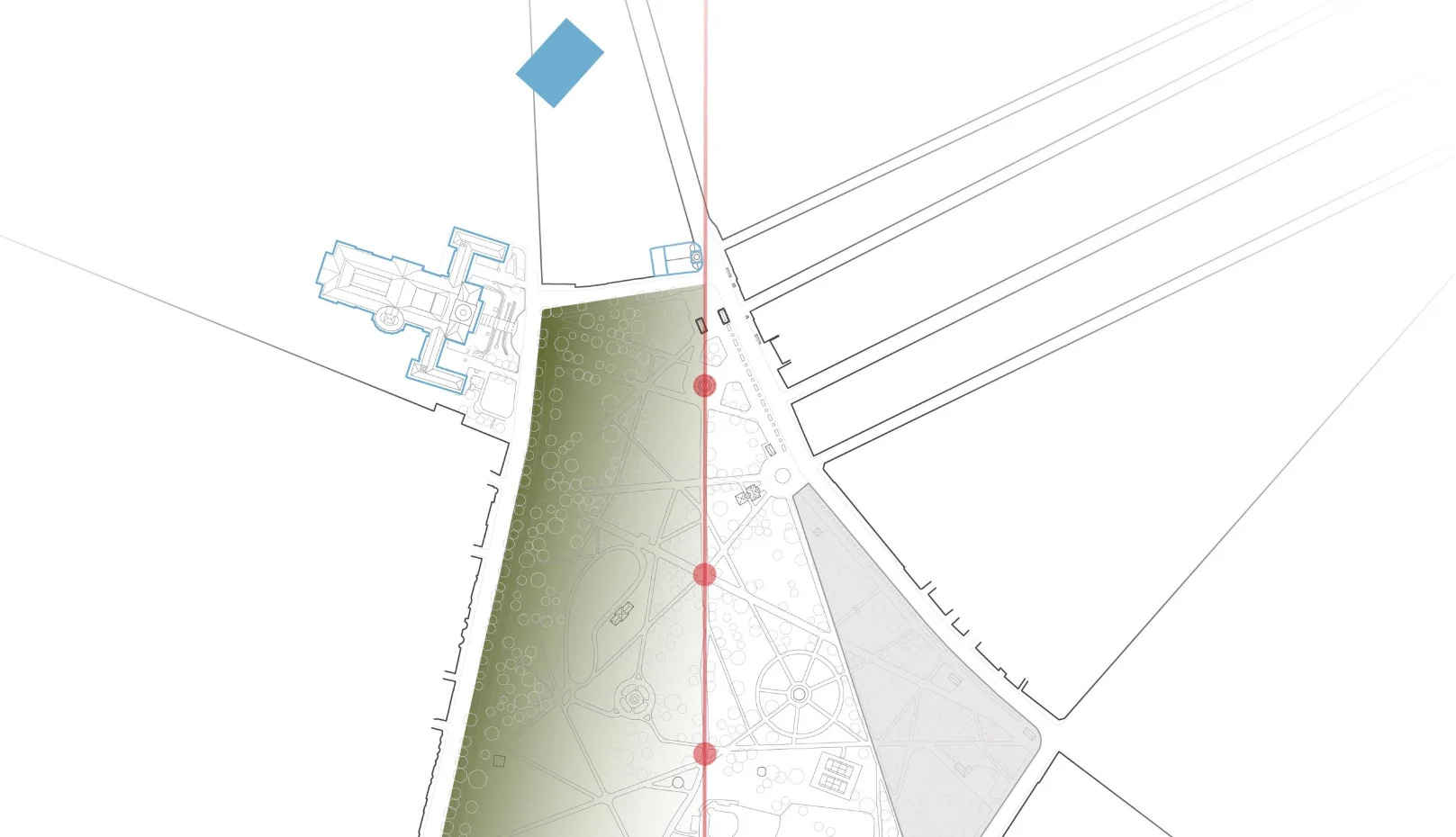
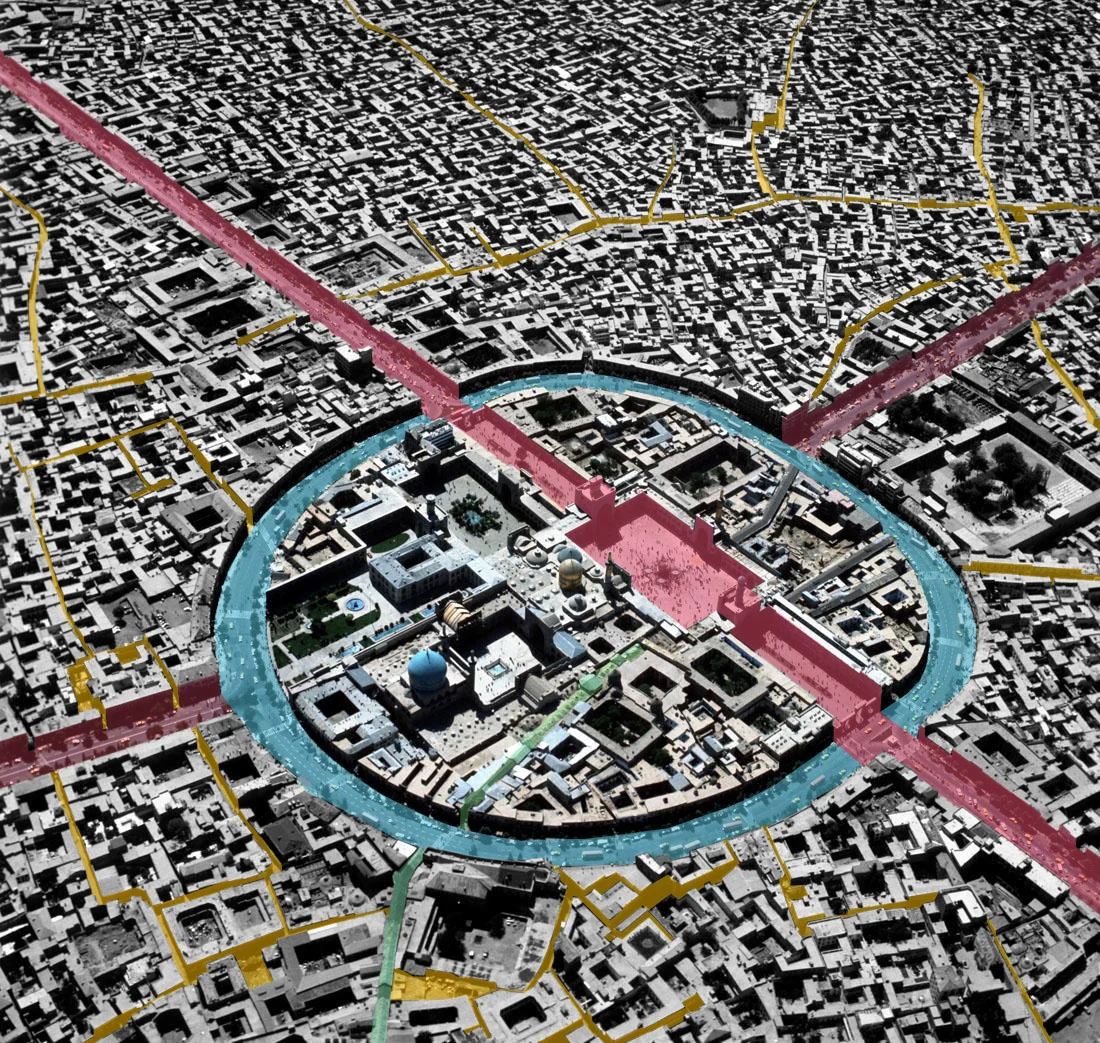
The central religious form becomes the heart of the city, pumping life in and out, evolving to keep the flow. Visual scale and a center stage position set an ultimate relational importance to the shrine. Dense areas of buildings crowd in, vying to be in close proximity. The heart grows through time with the flow of the people as religion is central. Between the core and wedges, a circulation ring becomes the threshold into the sacred. A major axis bursts in and invites in the community. Two additional arteries form the cross axis. Among the core, covered circulation spaces emerge, becoming part of the fabric. Past the ring, circulation funnels the people from the public core into the wedges, where smaller streets and alleys isolate families and individuals into their private courthouses.
Today the central heart has burst from its perimeter, taking living space away from the people and instead strengthening what is number one. When a central belief system determines daily function, does major physical evolution become unanimously understood and accepted? Do people willingly relocate to accommodate the needs of the community? This may be a self-designed effect created by a city layout which places the religious entity in the center of people’s daily universe and thus creates a self-fulfilling organism that grows.